

How To Make A Comic If You Can't Draw
E'er since y'all've read your first comic books, you were fascinated with them. And if you've got an creative groundwork y'all might have asked yourself how to make a comic book.
Comic books have captured imaginations for decades.
They are a corking way to introduce new characters, thrilling plots, and amazing worlds.
Their format allows artists and writers a great deal of freedom and some actually swell opportunities for collaboration.
If you've decided to make your own comic book, you lot need to know that information technology'due south a complicated and often difficult process.
Making a comic volume is a process composed of many steps. In the mainstream comic volume industry, fifty-fifty producing ane issue takes an regular army of specialized workers from its conception to its printing.
This is an intimidating process, especially if you're new to printing comic books. Switching from short-form media like webcomics to a long-form project is in tall order.

How To Make A Comic Book
Here are some tips and fob to assist y'all acquire how to make a comic volume.
Read Books nigh Making Comic Books
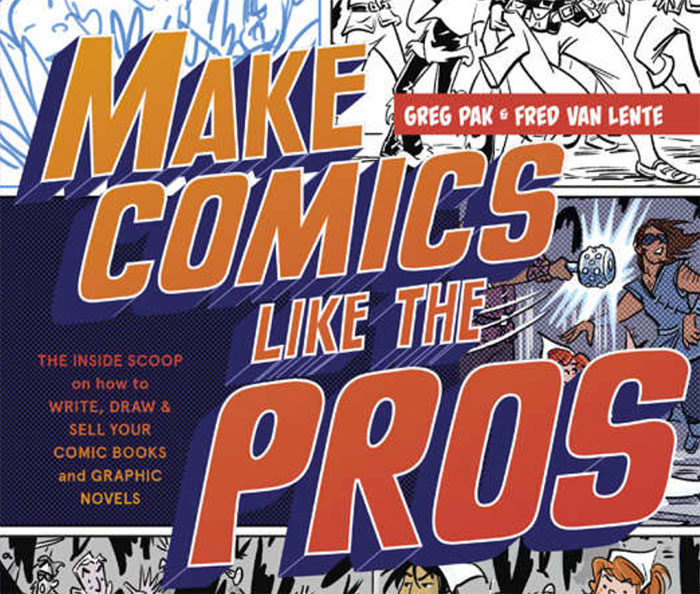
Ane of the best ways to larn how to make comics is to read books from experts. Draw on the experiences of those who have studied and succeeded in making a comic book.
This will spare y'all a lot of pain and also give you some ideas for how to go forward.
Hither are a few skilful books for you to read earlier you decide on how to start a comic:
- Understanding Comics and Making Comics past Scott McCloud
- How to Brand Webcomics past Scott Kurtz, Kris Straub, Dave Kellett, and Brad Guigar
- Unnatural Talent by Jason Brubaker
Be Inspired by Your Idea
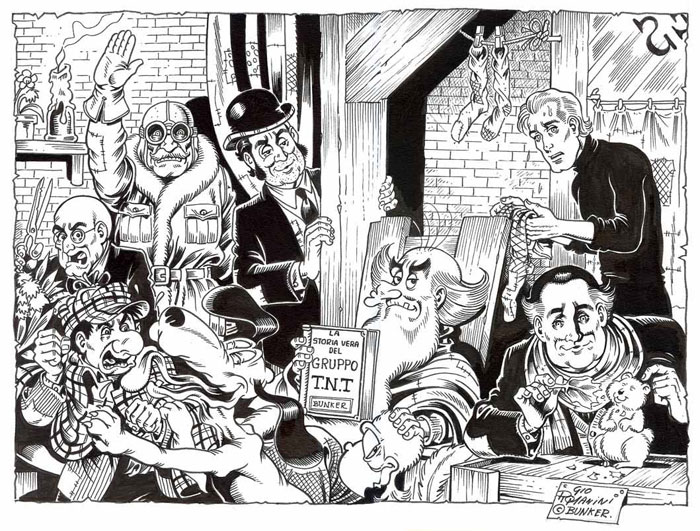
You need to really believe in your comic book concept and want to share it with others. Making a comic book is a long, hard process.
If yous really love what you're doing and care about what you lot're trying to say, it'due south going to be a lot easier to dedicate the fourth dimension and effort you're going to demand. This dedication will also show in the terminal product.
Model Your Characters
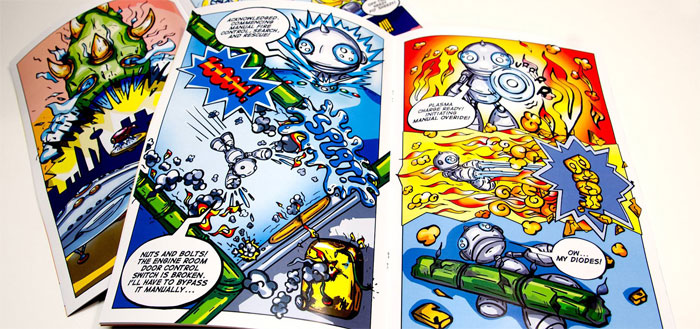
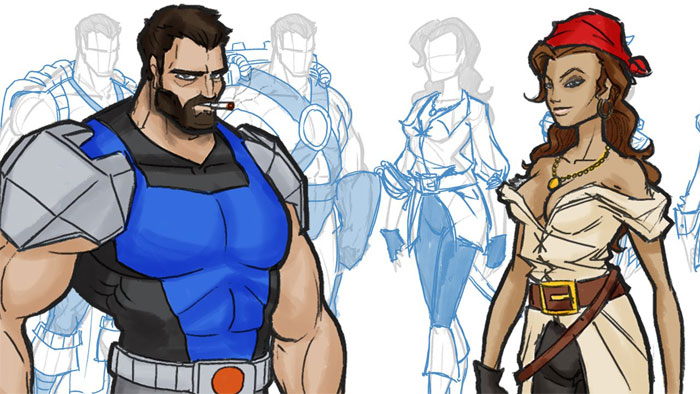
Characters and character design is a very important chemical element of your comic. Take the time to really figure out how to brand a comic volume character. Make a model sheet or turnaround. If yous accept the resources, time, and skill, endeavor sculpting your graphic symbol in clay or 3D.
Yous're going to be redrawing these characters over and over once more in different poses and environments.
You want to have a solid grasp on their design. Redrawing a character halfway through your comic is not something you lot want to end upwardly doing.
Develop a Good Style
Advertisement
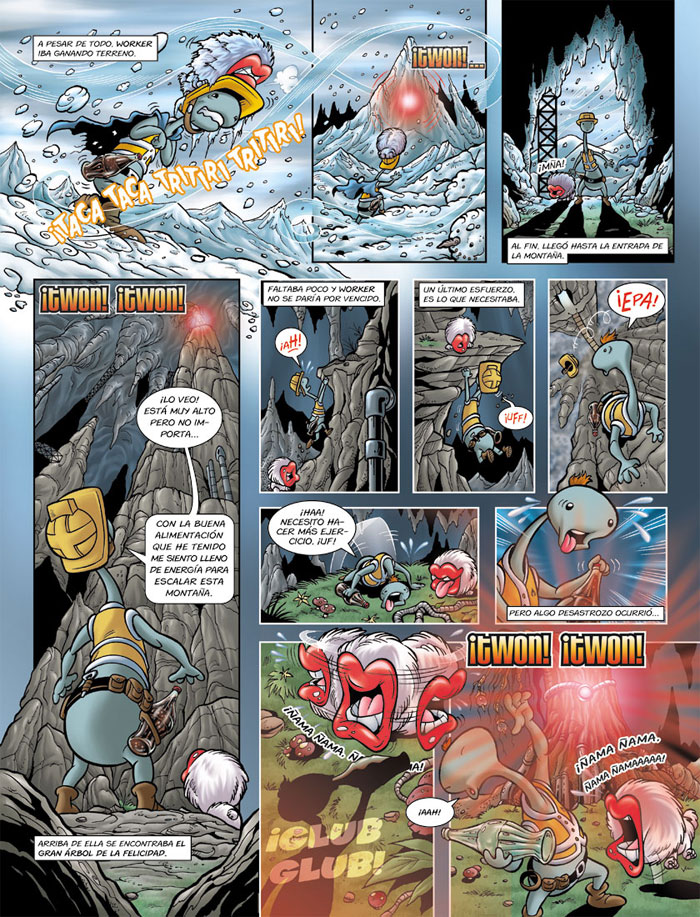
You demand to describe in a style that won't take too long to draw. While detailed panels may be fun, they take time to create and color. This is going to make it accept a long time to make your own comic volume. If information technology'south going to take more than than one consequence, it'south going to brand producing them have a long time.
Modern technology has made cartoon a lot faster. Yous don't have to ink all your pages since you tin can but boost the contrast of pencil lines in Photoshop or similar software. This will salvage you hours of piece of work. Having a good grasp of the various effects of your graphics software's tools is a smart thought.
Focus on Your Strengths
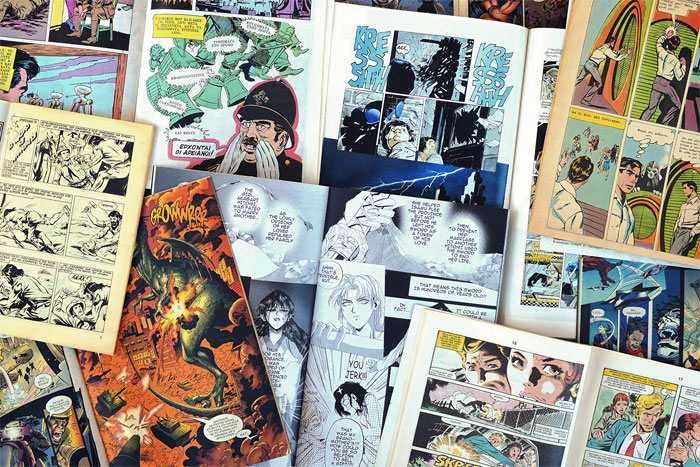
Describe what you like drawing. If you lot are terrible at drawing giant robots or animals, they shouldn't be what your story is about. The time to learn how to draw something is not when you are learning how to describe comics. It'southward not a great medium for it.
Fixing issues that you observe will make your production rate a lot slower and more painful. If you have a great idea, just don't have the skills for it, write it down somewhere and showtime figuring out what you need to learn to exist able to arrive a adept comic book.
Study the Basics
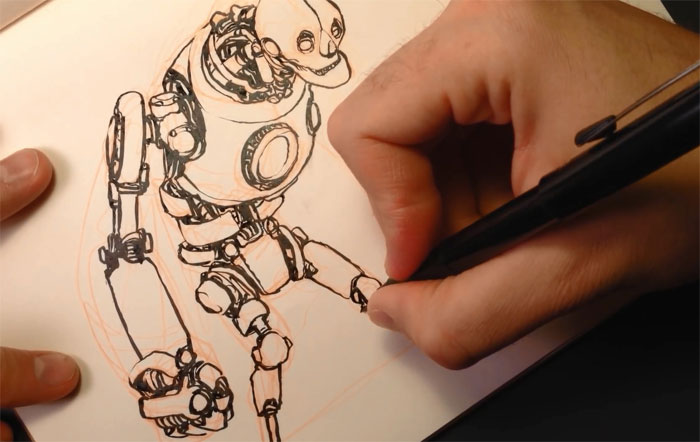
Information technology'due south important to know how real things move, specially if you lot're drawing homo characters. Fifty-fifty highly stylized comic volume artists need to know how the trunk really works and then they don't dip into the uncanny valley or draw disturbingly ugly characters all the time. Study anatomy before you offset on your comic book. Purchase books. Take classes. Use references.
It's besides important to understand other bones visual rules like perspective if you'll exist using it. Knowing these rules will result in a better looking comic book. Understand the basic artistic rules in order to acquire how to create a comic volume.
Fifty-fifty the most wildly stylistic comic book shows a good grasp of these rules. Their artists knew when and how to break them for the best upshot. They understand why a item scene or character makes a reader feel uneasy or charmed.
Create Stylistic Rules
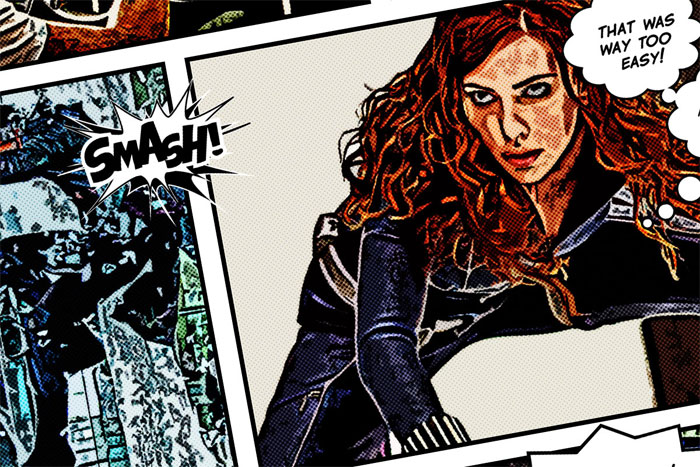
As you're deciding how to start a comic, decide on the rules you're going to keep for its fashion. This will ensure that information technology has a single coherent look from showtime to finish, instead of switching randomly.
Sometimes, you'll find yourself suddenly inspired by some new technique or the works of another creative person that you've just constitute. These rules are up to you. They should fit your artistic procedure and the subject. They should also exist appealing.
Every comic you make should have a different fashion. This allows for people to differentiate them and it besides allows you lot to experiment with new ideas. This applies to comic series every bit well. They should maintain a consistent style so they don't confuse readers.
Tips for Working
Here are some basic tips to help you know how to how to draw a comic volume effectively:
- Work in RGB and impress in CMYK. All you have to practise to pull this off is flatten your page and convert it when you're done. Make certain you lot relieve your RGB file with all layers in example you lot need to change it or use it as a reference. All printers utilise CMYK to print everything. There are a lot of opinions about this and you lot may want to have a look to see what people recollect. The RGB to CMYK conversion for printing does issue in very nifty, well-baked colors, just information technology may not be what you're looking for.
- Create your comic book in at least 300 dpi. Almost all printers print at 300 dpi. The large boys at DC and Marvel piece of work at 450 dpi to 600 dpi. Even so, it still gets reduced when it goes to impress. If y'all want to know how to brand a comic volume cover that yous tin can easily be printed as a affiche, make the file at 600 dpi. Again, this choice may or may not work for yous. Information technology is something you should make up one's mind before you start making a comic.
How to Make a Comic Book Step by Step
Create Your Script
The fundamental to knowing how to make comic books lies in the idea behind information technology. Often, this core concept begins every bit a very unproblematic idea, like "what would happen if aliens crash landed in 1860s England?" It could likewise exist centered on a graphic symbol, whether that's a superhero, a werewolf, or an everyman who finds himself in an extraordinary situation.
Information technology'due south a practiced thought to continue a notebook or word processing document just for these ideas. That way, you ever have somewhere to look for inspiration. Sometimes y'all'll get a new thought when you lot're in the middle of a project or otherwise occupied.
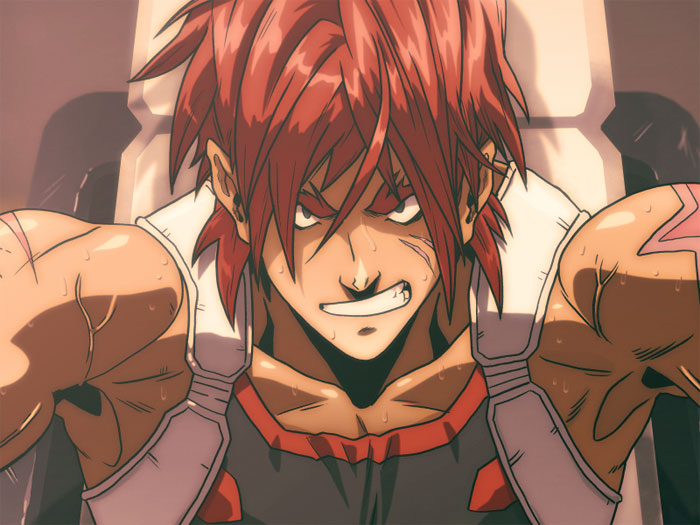
It'due south all too piece of cake to lose these ideas if you just keep them in your head. Write them down for you lot to look back at. Feel costless to include images that too seem like good inspiration for new stories to tell.
Writers are highly important for making comic books. Your writer can exist one person, or you can have several writers for a comic book. The writer can exist the person who originated the cadre idea of the comic, or it can exist someone else. Artists tin be their own writers if they're skilled at both drawing and writing, but not everyone is and some choose not to.

What do the writers for comic books do? Aren't they primarily stories told with pictures?
Yep, but they are pictures with a plot and usually dialogue as well. Even if you are doing a '"silent" comic, where there is no text and the story is entirely told in pictures, you notwithstanding want to plot information technology out.
Good comics use all the plot rules of any other kind of storytelling. Learning how to write a graphic novel is much like learning how to write many other kinds of media, peculiarly movie and television scripts.
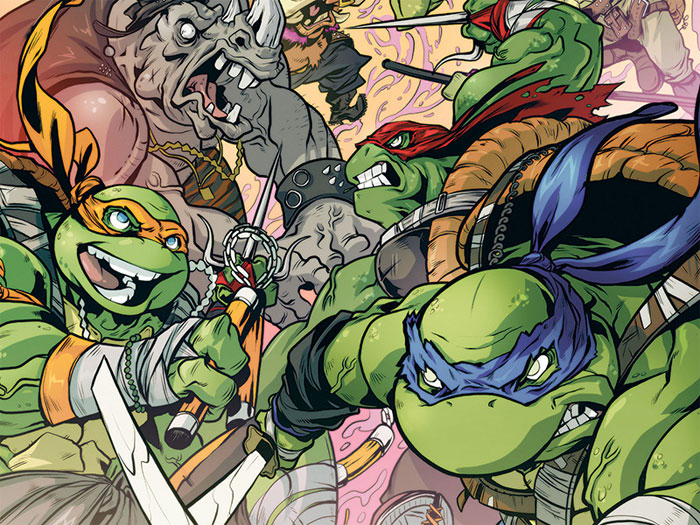
A comic book writer gives the comic its construction, setting, rhythm, and characters. How much detail the writer gives to the artist (if they're different people) varies. Some writers give specific instructions of characters and panels. Other time, a writer may simply give a vague plot. He or she will come back to add together in the right dialogue after the art hits a certain point of development.
Almost comic books are created by a team that works closely together. Writers and artists need to communicate their plans to each other. For the best results, frequent updates to each side of the comic book creation procedure work well. Writers are frequently the more visionary of the two, creating the ideas behind the plot, earth, and characters. Their scripts provide the basis for the art.
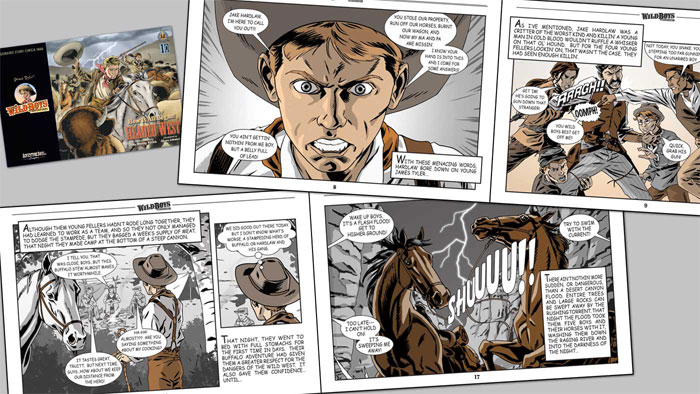
Hither's a listing of comic volume writer skills that you should develop if you're looking into trying it out:
- Practiced communication skills. Making a comic book requires a lot of collaboration between people with different skill sets. A comic book writer should be able to communicate clearly with artists and editors to make certain all the elements of the project come together to create a cohesive whole.
- The comic book writer isn't the artist, merely the writer is the source of the ideas that bulldoze the comic. Text works together with the art to create the story, world, and characters. A strong and lively imagination makes generating these ideas much easier.
- Good grasp of grammar. As with whatever professional writer, a comic volume writer needs to know good grammer and spelling.
- Things will not go the way you plan. Your editor or artist may desire or need to practise things a dissimilar mode. Flexibility will reduce stress and allow you to actually finish your comic.
- Deadlines are very of import when making a comic volume. Others on your team are relying on you to come across your deadlines so that they can meet theirs. Missing whatever of them is bad for business. If yous exercise it regularly, you will gain a reputation for being flaky.
Here are some more tips for anyone who wants to exist a comic book author:
- Y'all might be wondering if you lot should write using pen and newspaper or if you lot should go the modernistic route and utilise a computer. It all depends on you. Pen and paper are easily bachelor, portable, and you don't have to worry about startup or disastrous glitches. A lot of famous professional writers use pen and paper, like Neil Gaiman. You lot'll eventually need to put everything on a estimator, yet, but use a pen if that is more comfortable for y'all.
- Go on a dictionary and thesaurus shut to manus, peculiarly if y'all're writing on pen and newspaper. You'll want to know how to spell words correctly. Keep the thesaurus to make sure you lot have a large bank of words to cull from and so you don't sound stale or repetitive. If yous're using a computer to write, remember dictionary.com and thesaurus.com. Most word processing programs include spell check and a thesaurus every bit well.
- Proceed a lot of books around and read them. Good writers are oft adept readers. Reading will aid you become a better writer, just it can too give you new ideas to play with. Read more than only comic books and graphic novels. Read whatever skilful writing yous can go ahold of.
- Maintain a personal website. This is really important for your writing career. It gives you lot a digital "home" where fans can connect with you and you can promote your projects. It tin function every bit a resume, as well.
- The all-time matter to do to get a author is write. All the books, notebooks, and positive mental attitude won't help you be a writer if you don't write.
Plan Your Layout
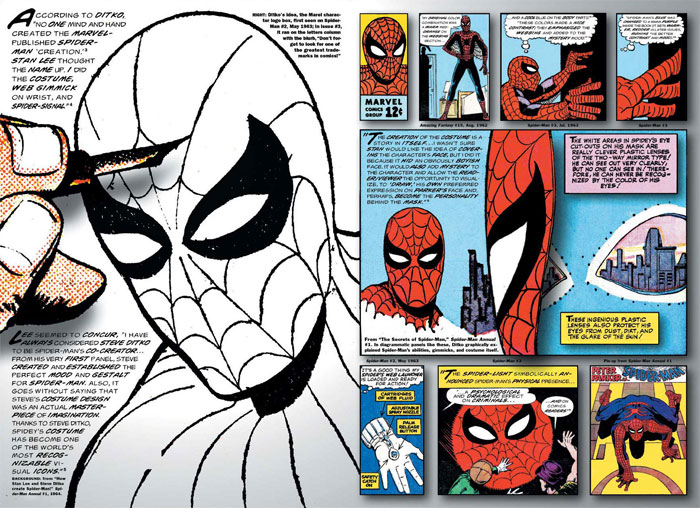
With your script complete the next footstep you need to take in order to make your own comic book is programme the layout.
A good comic book layout keeps readers interested. A good technique is ending almost every page with a cliffhanger. This will draw readers in and make them wonder what is coming side by side.
They'll know it's going to exist something interesting, only they won't know what it is. This will proceed your readers turning the folio. If you're creating a comic book series, do the same for every consequence for the aforementioned effect.
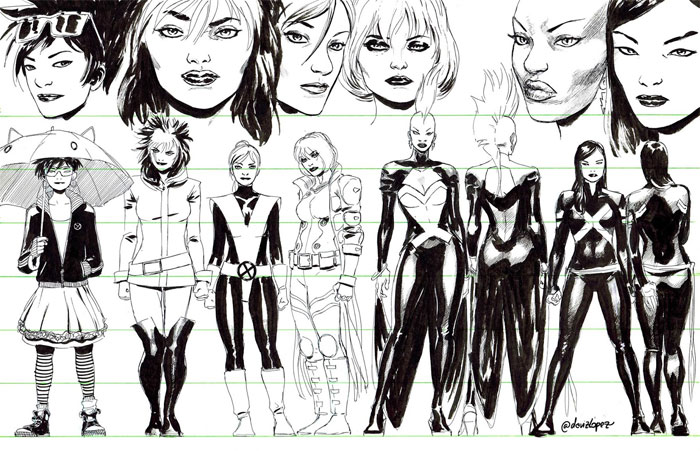
Thumbnails are a useful format to create layouts. Thumbnails are like to storyboards. They will allow you to work through any compositional issues before you commencement inking and coloring your drawings.
Care for them every bit an extremely rough draft of your drawings and overall layout. Keep it on hand every bit a reference for when y'all move further downward the line. Be prepared to change information technology since you, your writer, or your editor may make changes that affect the flow of your layout.
Don't forget to leave room for dialogue. This will be added after the drawings have been completed, normally as their ain layer on graphics software like Photoshop.
Penciling
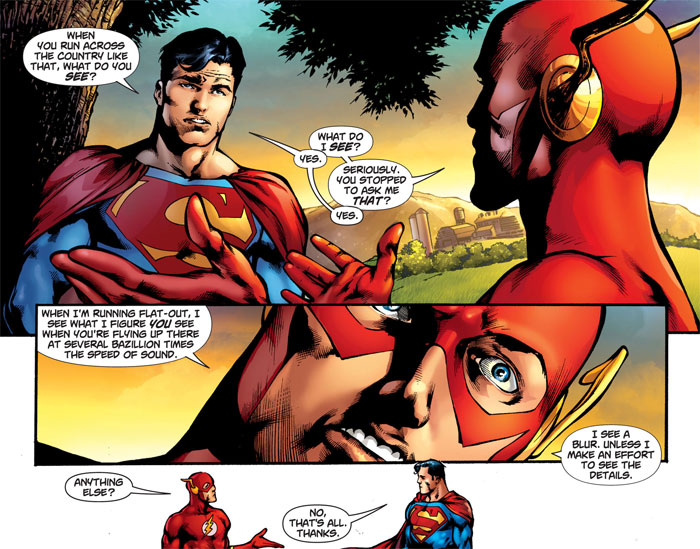
Once the layout and plot are ready, the start stride in creating your art is to, well, draw it. At this phase, information technology goes to the penciler. This is the person who draws out the story using a pencil. Using a pencil makes information technology easier to set up any mistakes or brand changes quickly.
The penciler is just responsible for a small portion of the comic, but that pocket-size slice is a vital piece. Many people judge a comic solely on the basis of its artwork. Good writing will not relieve a comic with bad art.
The penciler is the one who takes the script and actually gives it form. Some scripts are highly detailed, describing how everything should look. Others only make basic suggestions about what should be on whatever given page. The penciler will need to take whatever kind of script there is and bring it to life in a quality mode that makes sense.
The skills you need if you desire to be a penciler are:
- Artistic skill. If you want to be a comic book artist, you need to know how to draw. Study art and anatomy to develop your skills. Take a look at the work of the some of the comic book greats like Lee, Kirby, and Cassaday. Do every day. Buy books and accept classes.
- Express the images in your mind. Y'all need to exist able to envision something than exist able to put it on paper. This tin be very difficult. Y'all may need to make some trial sketches to get an image just right.
- When making a comic volume, things change all the time. Editors and writers may require things to change suddenly, or plans may fall through. If you're working as the sole creator, this is still true, just freelance artists need to be extremely flexible since they're working with other nearly every pace of the way towards publication.
- Meeting deadlines is very of import. Without art, in that location is no comic book. Delays in penciling will delay everything else.
- Collaborative attitude. Comic books are the product of a team endeavour. You'll be working with writers, editors, other artists, and more. You lot demand to be willing to work with others and brand changes based on their suggestions. Learn when you need to stand your footing and when you demand to be flexible.
- You need to retain a consistent manner throughout the project. Your characters should have the same look throughout the comic book. It's possible to brand intentional changes, merely they should be triggered by some effect in the story. Consistency will make y'all a better artist and will besides assistance build your professional reputation.
Here are more tips for anyone aspiring to be a comic book penciler:
- Have good pencils. Y'all may prefer the archetype yellow pencil, simply some artists like more precise, piece of cake to go along precipitous mechanical pencils. A lot of pencilers prefer to utilize a low-cal bluish colored pencil since it will disappear during copying. You can also utilise brushes or anything that leaves a mark, but they're called pencilers for a reason. Their about common tool is still the pencil.
- When you lot start out, whatsoever kind of paper will do to help you go the basics. In one case you lot're more comfortable and ready to get-go investing more in your skills, most artists apply a kind of paper chosen Bristol Board or Bristol Paper. This is an 11 X 17 size piece of multi-ply paper with a 10 Ten 15 size working space. This is the industry standard.
- Keep a sketchbook around at all times. This volition allow you lot to sketch ideas down wherever you lot get. You might but be out walking your dog when things volition of a sudden click. Go the ideas down on newspaper chop-chop so they don't fade away.
- Have a specialized workspace. A lot of pro artists use some course of art tabular array equally their workspace. It can be adapted to different angles to make drawing more comfortable. Sometimes, these tables take an opaque or glass top with light under information technology. These are called light boards. This allows artists to brand rough sketches on cheaper paper that tin can exist traced on nicer paper for the final product. Whatever kind of workspace you adopt, it should be a defended infinite for drawing, with all the materials y'all demand within easy reach. This consistent, customized space will help produce consistent fine art.
- Keep reference materials nearby. These tin be books, character sheets, or fifty-fifty single reference images. If you demand to depict the White Business firm, search for an prototype and use it equally a reference. Go along anatomy books on hand. Some artists use reference models to get lighting, shadows and poses correct as they draw.
- Consider using digital methods to create your drawings. This can be done at the penciling phase or anywhere along the line. Information technology'due south usually what is done these days when fine art moves into the inking, coloring, and lettering stages. Even if you lot prefer to work past hand, agreement how to use digital methods will assist you amend understand how other creators call up. Wacom tablets are a mutual selection since they connect directly to a computer and draw in a plan. It is often used for a lot of unlike stages of making a comic book.
- You lot should become a skilful scanner since most comics are finished digitally. This will get in easier to send information technology to the next stage, of grade, just it will also make it easier to send to other members of the comic creation squad for review and input. Y'all can apply information technology to go on backups of piece of work that's done on paper, which is fragile and can be hands damaged past most anything.
- Create a website to showcase your work. This can offer an easily updated and accessed portfolio for future employers to look at. It'south as well a smashing way for fans to connect with you, as well equally offering a platform to tell people about new projects and sell any items yous've made (like prints, for instance).
Inking
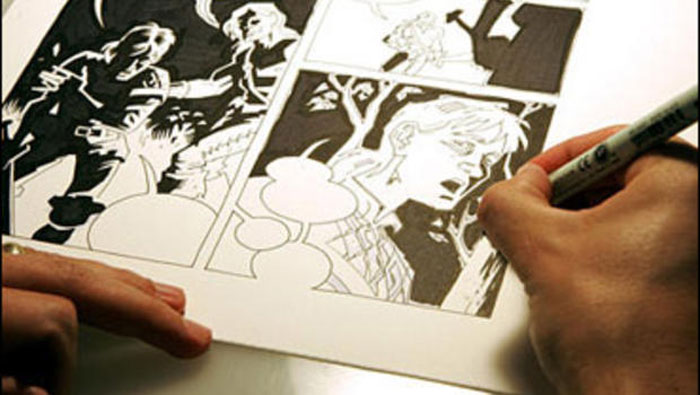
Inking takes the penciled sketch of the artwork and turns information technology into a final piece of artwork. Inkers get over the pencil lines with blackness ink and add together in depth. Information technology will look much more finished and three-dimensional afterward this process is completed. The inker also makes the artwork easier to copy and colour.
Pencil lines are rougher and fainter, making information technology much harder to do these things. Sometimes the penciler is as well the inker, though it is a different gear up of skills. Sometimes people refer to inking every bit glorified tracing, just it is a vital footstep in comic book cosmos. A expert inker is an artist in their own right.
Y'all cannot move a comic book to the printing stage without them. Some well-known comic volume inkers are Klaus Janson, Bob McLeod, Vince Colletta, Jimmy Palmiotti, and Mark Farmer.
Skills an inker needs include:
- Artistic skill. Inking is more than than tracking. An inker needs to empathize how art works just every bit much as a penciler. How heavy exercise liens in the foreground need to be compared to background ones? What's the accent in this scene? A expert inker understands these questions and is often a fairly gifted illustrator in his or her own correct.
- A proficient sense of light and dark. Inkers are responsible for calculation depth to the art. They piece of work simply in blackness and white. Shadows and light are very of import in accomplishing any sense of dimension. Agreement them well will turn even flatter, stylized art into dynamic scenes.
- Inking is a fast process. Inkers need to exist quick and authentic with their work.
- Things can change rapidly. A completed project may have to go back for extensive reworking, perhaps on an even tighter schedule. An inker needs to remain flexible no thing what happens.
More tips for aspiring inkers:
- Republic of india ink is the 1 used past most inkers. It is a black carbon-based ink that retains its colour when put on paper.
- Most inkers use crow quill pens and brushes. However, you tin can use almost anything that can put ink on the paper. Y'all can use sharpies, mechanical pens, sponges, and even q-tips. Sometimes these odd inking tools can create interesting effects.
- Remember that y'all will make mistakes, and so proceed white-out on hand. Also, know how to employ it well. You can use any kind of white-out. Many pro artists use a gauche water-based paint for white-out.
- Use a ruler to create perfectly straight edges. Very few people can reliably draw direct lines even if you are tracing one. At that place are a lot of straight lines in comics, like panel borders. You may want to become a triangle and other straight border tools, as well.
- An inker should accept a workspace that helps with concentration. Similar pencilers, many inkers use an adjustable drawing table. A overnice adjustable lamp is besides a good idea since you'll want to shine plenty of calorie-free on areas where yous need it.
- More and more comics are being inked digitally. Most oft this is done with Photoshop. Make sure you understand how all the tools in the program work.
- Set up up your own website. An inker needs a portfolio like any other artist, likewise as a place for fan to reach out and a platform for promotion whatsoever projects you are working on.
Coloring
Coloring is addition of color, shading, and lighting to the inked drawings of the comic volume. Attention to item is vital. If a colorist makes a mistake people notice. Randomly switching hair colors and of a sudden vanishing details confuse readers. Good colorists bring in the final, vital touch of life to comic book art.
Coloring is often broken up into two sections: flatting and coloring. During flatting, basic color areas are blocked out to guide the colorist through what infinite needs to be what color. Coloring consists of adding the colour, lighting, and shading. This helps complete dimensionality and depth added in by inking.
Some comic books cull not use coloring at all, like "The Walking Dead". These by and large don't sell equally well in most places. Sometimes it is an attempt to save money, while others use it to add together a certain fashion. Well-nigh Japanese comics (manga) are non colored.
Skills required of a colorist:
- Understanding of color. Colorists know how to use color well. They understand color theory. They empathize how lighting changes colors. While colorists can receive helpful formal training, a lot have learned as they become.
- Artistic professionalism. Colorists aren't just coloring between the lines; they are artists, too. A colorist needs to exist patient and possess some caste of artistic skills. A colorist should be practicing on a regular basis and continuing to improve.
- Coloring is i of the terminal stages of comic book cosmos. Earlier delays will event in a colorist having less time to complete his or her piece of work. Multiple delays will all be felt at this bespeak in the process. That ways a colorist needs to be able to work quickly and accurately in order to meet deadlines if there are delays earlier on.
- Tech know-how. Virtually all coloring is now done digitally. Knowing how to utilize this technology well is very important. Most colorists will never touch the physical art, only will instead exist coloring a scanned slice.
Other tips and trick for a colorist:
- A lot of colorists exercise their work on a Mac computer. A windows machine tin piece of work perfectly well for coloring, of course, but the industry standard is a Mac. A good agreement of how to employ a Mac and iOS will go a long style.
- The almost common software used for coloring it Adobe Photoshop and Adobe Illustrator. You lot can do a lot with these programs. At that place'southward all kinds of color and texture options, besides equally many tools that make coloring much faster, authentic, and easier. These programs are something y'all really demand to have but keep in mind that they are expensive. In that location are free programs bachelor similar GIMP and Paint.internet, but they do not practise all the same things.
- Consider getting a Wacom tablet. Many colorists consider it a must-have. Yet, if you're just starting out, don't experience yous demand to invest in i. It is good to accept if you want to feel like yous're actually painting in color.
Lettering
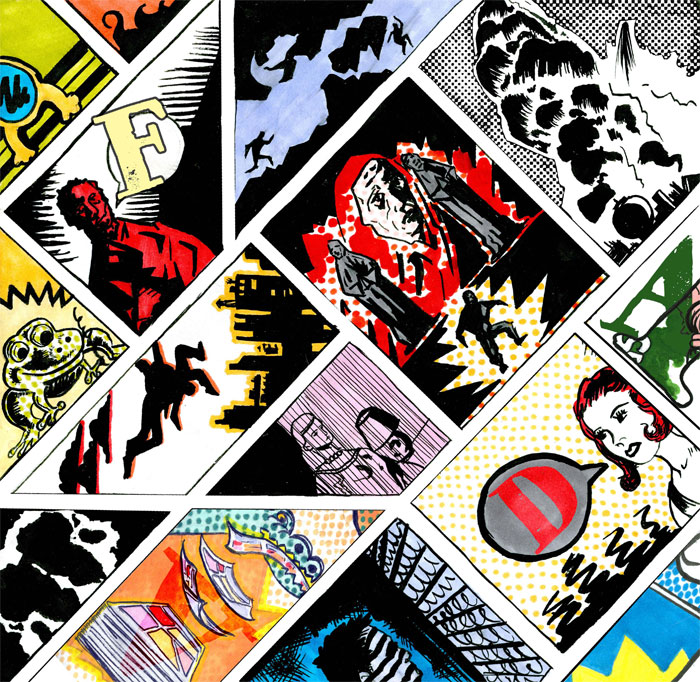
Lettering is the process used to add dialogue. Letting works alongside fine art to move the plot forward and allow the characters to limited themselves. Letterers don't only add in dialogue.
They besides add in the titles, sound effect, captions, thought bubbles and more. Text needs to exist added in then that it'due south easy for a reader to follow. The chosen font should be like shooting fish in a barrel to read at relatively pocket-size sizes.
There's a lot of room for creativity in word balloons and audio furnishings. Many letterers add in these elements on a computer, though some add together them in past hand using an Ames Guide and T-foursquare. Text, word bubbles, and thought bubbles should always add to a story, never detract from it. They tin can't cake important things that are going on in the scene.
Skills that a good letterer needs:
- A honey of linguistic communication. A letterer needs to know how to convey pregnant through text. Look through some comic book example and you'll notice that a lot of letterers try to make the text await like a person or thing sounds. Nail is in large capital messages, while a reckoner will utilise a digital-looking font. Whispers volition exist soft and the messages will have a lighter weight.
- Strong grammar skills. Letterers are often the terminal defence force a comic book has against typos. Since lettering is frequently typed in by hand, with no spellcheck available in the program, a letterer needs to accept a good, about instinctive grasp of spelling, punctuation, and word use.
- Noesis of graphic design. A letterer often has to think like a graphic designer when they design logos, titles, discussion balloons, and sound effects. What kind of font is well-nigh effective? What size should it exist? Is this airship the right size for the dialogue? Is this improver helpful in improving the reader's experience and understanding? These are the sorts of questions a letterer needs to ask.
- Tech knowledge. Since nigh lettering is washed on a computer now. Some programs that are used for lettering include Adobe Illustrator, Photoshop, and Indesign. Know how to use them. You might likewise desire to learn how to apply font making software like Fontographer, FontLab Studio, and FontForge.
- Bang-up penmanship. If you want to practise lettering by paw you'll need to acquire the oftentimes-forgotten fine art of actually great penmanship. It should be easy to read. If it's very adept, you tin can even plough it into its own font, which is a common practice.
More tips for aspiring letterers:
The industry standard for lettering is a Mac. You tin can employ Windows, merely you'll observe that you're expected to piece of work on Mac. Lots of RAM and fast processor speed are the of import things to recall when getting a reckoner for lettering.
Adobe Illustrator is the manufacture standard. Adobe Illustrator is a vector based program that uses lines and curves based on math to create images. You can employ other programs, merely anyone y'all work with or for will expect you lot to employ Adobe Illustrator.
No affair if yous're working on your own or with a larger company, you lot'll need a manner to send files. Companies frequently use an FTP server to practice this. If you're on your own, you'll demand to get some kind of storage that yous tin take to the printer. Speak with them to meet what one has worked best for them in the past.
If you plan on doing manus lettering, make sure to have pencils, erasers, an Ames guide, and a T-square on hand. These are the tools that you can use to get consistent, great looking letters. When you accept the messages penciled in, so you should use a crow-quill pen and India ink to ink them in. For consistently shaped word balloons and other items, purchase some stencils in a diverseness of sizes.
Editors
An editor works every bit a manager through the whole production procedure. Editors ensure product quality. They identify problems and arrange for any fixes that need be made. They may fifty-fifty be able to do information technology themselves. The editor checks for errors- -text, color, or even plot bug—and makes sure the concluding production is polished.
Printing and Publishing
Press is only done later everything has been signed off by the editor. Frequently this is done in physical print, simply more than and more comics are printed digitally. This procedure can be done very chop-chop.
The publisher is the one who releases the comic. The publisher tin can take a lot of other roles, likewise, including editing and marketing. They may likewise provide the funding for the comic. Some people choose to retail their comic online, at stores, or at conventions on their own, but you can too plough to studios similar Dark Equus caballus or Image Comics.
Skills needed for publishers:
- Business concern know-how. Publishing is all about business. A publisher needs to know what needs to happen and when. They need to know who can be trusted to get work done on time.
- People skills. More than anyone else on the team, a publisher needs to be good with people. Being a likable person is very helpful in this position. People will be more than willing to assist yous out and yous'll find the squad is more willing to come across your schedules or needs. You take hold of more flies with dearest than with vinegar, after all.
- Financially smart. A publisher needs to sympathize how to keep the books. How much should be spent for things? Are you lot paying likewise little? Too much? Is using a more than expensive option (like a glossy cover) worth the extra money or is information technology a pointless expense? These are the sorts of questions publishers should be asking and figuring out the answers to. This is a vitally important skill. It volition brand or pause you as a publisher. Beingness able to manage coin well on a projection will buy you lot a lot of slack even as an amateur publisher
- I of the worst things a publisher can do is make promises they can't keep. Burning one bridge with an artist tin can pb to a cascade of burnt bridges class their friends and networks. The comic world is quite minor and people talk to each other a lot. Be honest with your schedules, contracts, pay and whatsoever other terms. This volition build your reputation rather than damage information technology.
Some other tips for anyone looking to become into comic book publishing:
- You're going to demand money. It doesn't matter how small your run is going to be or if you're publishing only digital comic books, you lot're going to demand coin. You lot need pay talent, impress, market, and go equipment.
- Computers aren't optional. Well-nigh all communication you practice will exist on a calculator or smartphone. You'll demand to check over work, which is almost all sent digitally. There is no publisher out in that location who does not do business without a computer.
- Figure out how y'all're printing a comic if you're creating a concrete re-create of it. There are a lot of option here, from established printing firms to companies on the web to Kino'due south. Do your research to figure out what works all-time for you. There are a lot of price ranges and options out there. A lot will depend on how large a run you desire to exercise.
- Having assist is great. Having people available to assist answer phones, post packages, fix booths, and man those booths is going to remove a lot of pressure from you. See if y'all tin get friends to assist if you don't have the money to hire anyone.
- Y'all may want to hire a marketing firm to assistance you exercise PR and then y'all don't take to figure out how to do information technology yourself. Money is the existent object here. If you've got money merely no fourth dimension, information technology might be time to rent someone else to practice your marketing.
- If y'all want to distribute a comic, yous're probably going to rely on Diamond Comics. They are the distributor for comic book stores around the US. Check out their website to meet how y'all tin get them to distribute your comic book.
- Make sure you create good contracts. People will sue over a lot of things. You can vet people all you desire, simply it might non exist enough. Create some advisedly worded, honest contracts for everyone on the projection. You don't want to get caught up in a disaster if something goes incorrect.
Marketing
Unremarkably, you start getting the word out nearly the comic before it's even finished. You should make press releases for websites and magazines. Advertise in those places, too. One time yous take review copies ready, send them out to reviewers. Skilful reviews will requite you a nice caput start.
Tell anyone and everyone well-nigh your comic and why they should read it. Social media makes this much easier than information technology used to be. Crate social media pages for the comic and post regular, interesting content. You don't want to inundation people's feed, but you lot exercise want to catch their attending.
Distribution
The most common fashion to get your comic out there is to distribute it through Diamond Comics. They accept a tricky submission procedure and you will demand to brand sales quickly.
You can also sell at comic book conventions, which can exist constitute in nearly every major city and quite a few smaller ones. You can too sell your comic online or, if you remember you've got a good sales pitch, ask comic volume stores in person if they'll sell it.
Start a Webcomic

In that location are a lot of reputable webcomic series out at that place, including Genius Girl and Penny Arcade. Some are like the comic strips found in newspapers, others have long-running plotlines.
This can be a improve choice for your comic. A lot of them are free, but they offer a number of products or even fan clubs that can help turn a turn a profit. If yous're running into problems with traditional publishing, consider figuring out how to start a webcomic instead.
Ending thoughts on how to make a comic book
Making a comic book requires a lot of work and a lot of cooperation, but it is an incredible matter to see your writing or art come up together to tell a story.
If you liked this article on how to make a comic book, you should check out these likewise:
- How to draw anime: learn to do anime drawings
- Digital Painting: Concept Art, Techniques, Tips, and Tutorials
- Speed painting: How to speed pigment and create beautiful artwork
Unlimited Downloads: ane,000,000+ Fonts, InDesign Templates, Photoshop Deportment, Mockups & Design Assets via 

Source: https://www.designyourway.net/blog/graphic-design/how-to-make-a-comic-book/
Posted by: lupientorty1994.blogspot.com
0 Response to "How To Make A Comic If You Can't Draw"
Post a Comment